
Impactful offsetting: using regenerative farming to generate carbon creditsÌý

The need for impactful offsetting in the built environment
Written by Gemma Drake, UKGBC:
To be net zero, an individual building must do two things. Firstly, it must meet minimum energy use intensity and embodied carbon limits in order to follow a science-based decarbonisation pathway in line with 1.5ËšC (to be defined by the forthcoming ). Secondly, after these targets have been achieved, carbon offsetting of residual emissions along with the procurement or generation of additional renewable energy is needed to reach the net zero state.
While there has been much important journalism on the challenges of offsetting effectively, . The critical question of how to offset in a way that truly has an impact, remains at the forefront of the climate crisis. Realising projects that remove greenhouse gases and enable the transition is paramount. Effective offsetting has a real emissions impact through additionality, permanence, no double counting and robust quantification of emissions reductions and removals (see the for more detail), whilst also enabling a broader positive impact through its co-benefits.
±«°³Òµþ°ä’s Carbon Offsetting and Pricing Guidance provides the built environment industry with a step-by-step process for taking a holistic approach to ambitious offsetting. The guidance was updated in June 2024 to bring it in line with the revised and the Integrity Council for the Voluntary Carbon Market’s (ICVCM) .
There are various types of offsets available, and these can be categorised into avoidance, reduction or removal offsetting projects. , there can be a place for reduction offsetting projects, particularly when they come with numerous co-benefits, such as .
There has been an increasing discussion amongst ±«°³Òµþ°ä’s members in the UK built environment around local offsetting. According to the , in 2021, only 0.1% of the credits purchased by UK companies in the voluntary carbon market were sourced from UK offsetting schemes. A growing local offsetting market would deliver positive environmental and social co-benefits to the UK and enable companies to more easily conduct due diligence on the offsetting projects they are supporting.
In a recent report from Arup and BusinessLDN, , they propose a London offsetting fund comprising three distinct portfolios. These portfolios are retrofit, nature, and engineered. By having three portfolios, organisations can procure a combination of credits that align to their climate ambitions and business goals.
The nature portfolio encompasses credits from protected nature-based removals schemes, and this offers the co-benefits of biodiversity and ecosystem protection.
Regenerative agriculture is an example of a nature-based scheme
Written by Archana Veerabahu, Agreena:
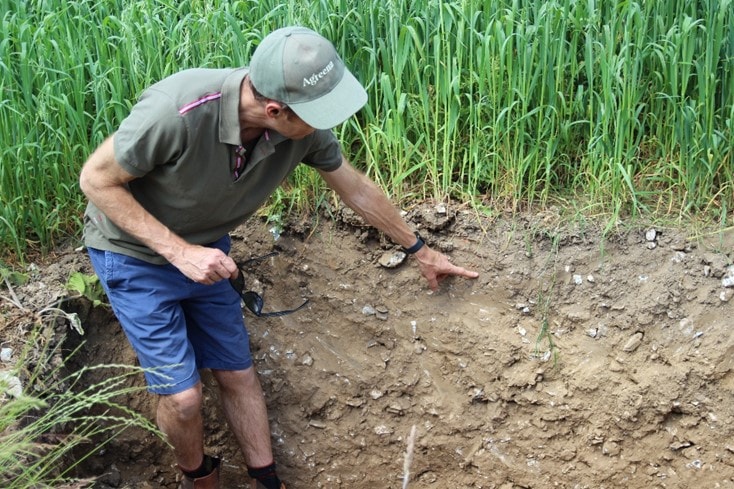
This summer, UKGBC ran a visit to in collaboration with to showcase a regenerative agriculture offsetting project to our members and meet Rob Waterson, the Farm Manager at Welford Park Estate, to understand how they are moving towards regenerative agricultural practices.ÌýÌý
is a climate-smart approach to farming that restores natural processes to deliver resilient agricultural systems. Regenerative farming practices include cover cropping, crop rotation, reduced tillage, sustainable use of crop residues and use of organic fertilisers.
By transitioning to regenerative agriculture farmers can reduce their carbon emissions and sequester carbon in their soils. Regenerative agriculture also delivers many additional ecosystem benefits such as improved soil health, greater water retention and enhanced biodiversity.ÌýÌý
ÌýÌý
ÌýÌý

The need for a wide scale transition to regenerative agriculture in the UK has never been more urgent. In England and Wales intensive agriculture has caused arable soils to lose about and soil degradation was calculated in 2010 to cost £1.2 billion every year.Ìý
The potential for storing carbon in our soils is significant though – UK soils currently store about 10 billion tonnes of carbon, roughly equal to 80 years of annual UK greenhouse gas emissions.Ìý
The built environment sector has a vital role to play in supporting this by helping to channel climate capital toward the principal stewards of our land – UK farmers. The greater the speed and flow of climate capital, the faster and more effectively UK farmers can undertake the transition.Ìý
ÌýÌý
How does Agreena facilitate regenerative farming?
In the early years of transitioning to regenerative farming, farmers can face a short-term drop in yields and a need for additional investment. Given that many farmers are operating with razor thin margins, they are unable to make the move to regenerative agriculture in the absence of transitional financial support.
Agreena is working with organisations to address this ‘finance gap’, bringing corporate finance into the farming sector. As Europe’s largest soil carbon programme, AgreenaCarbon supports more than 1,000 farmers as they adopt regenerative practices across 2,000,000+ hectares of arable farmland in 19 countries.
The generates high-quality, verified credits from UK farms, adhering to and traceable to the exact fields they were generated in.
Agreena uses a combination of advanced remote-sensing technology, machine learning and physical soil sampling for robust measurement, reporting, and verification (MRV) that underpins its carbon credits. Each high-quality soil carbon credit represents one metric tonne of CO2e removed or reduced due to regenerative practices. These credits act as a much-needed financial incentive for farmers to adopt sustainable methods. In the long term, this scalable model supports the transition to regenerative agriculture, restoring soils, and enhancing biodiversity in the UK and Europe.
What did UKGBC members learn during the visit?
Discussions focused on the generation of soil carbon credits, carbon financing, and ensuring credit integrity through ´¡²µ°ù±ð±ð²Ô²¹â€™s advanced – including how Agreena matches farmers’ data and satellite information with ground-truthing and soil sampling. Demonstrations provided a practical understanding of the importance of regenerative practices, such as crop residue management (utilising the waste materials left over after harvest such as leaves, stalks and stems).Ìý
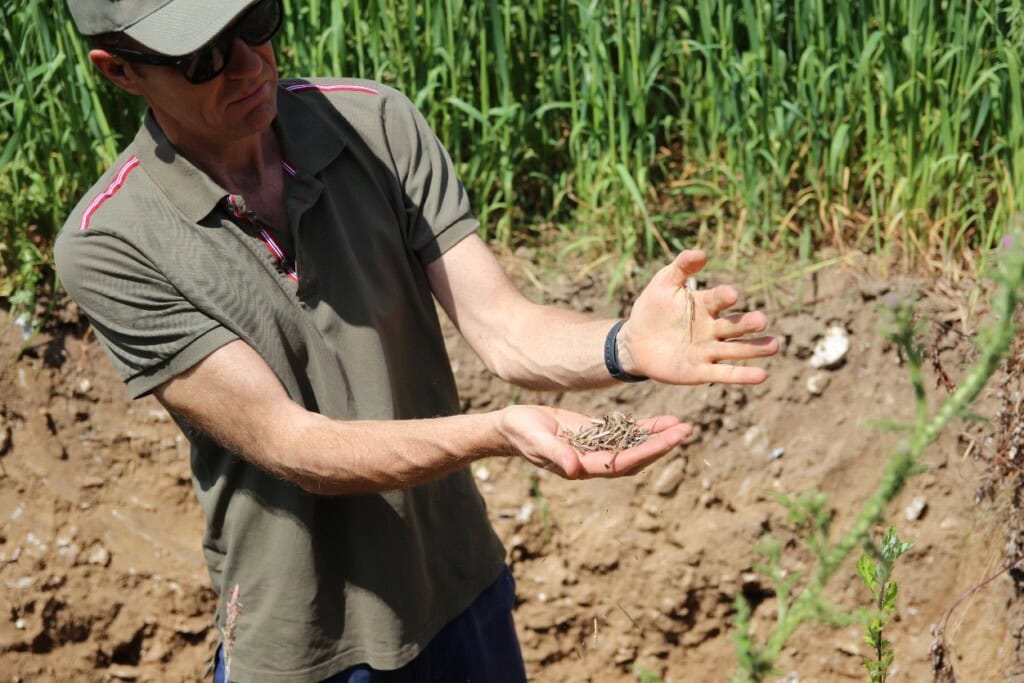
Rob Waterston, Farm Manager at Welford Park Estate said:
It was really interesting to chat with these businesses and learn about the challenges they’re facing with their carbon footprints. Networking with them gave me a chance to explain how agriculture can sequester CO2 and what we need to do to make it happen.
The visit reinforced how important it is to have these conversations to promote awareness about sustainable agricultural practices and how carbon farming is part of our future.�
If you would like to learn more about carbon offsetting and pricing in the built environment, you can read ±«°³Òµþ°ä’s Carbon Offsetting and Pricing Guidance and attend our on the 8th of October.
Carbon offsetting and Pricing Guidance


Carbon Offsetting and Pricing Masterclass


Related
UKGBC responds to the Warm Homes Fund’s Call for Evidence


New framework to help reduceÌýand manageÌýcarbon emissions launched by UKGBC


UKGBC responds to the CCC’s ‘A Well Adapted UK’ report


From Learning to Doing: Taking your Sustainability Knowledge FurtherÌý