Ä¢¹½Ö±²¥

Problem Addressed

How to increase the thermal efficiency of walls and floors in older buildings without adversely affecting moisture levels.

Solution Overview

When used as a simple insulating base coat on walls or as a lightweight screed on floors,ÌýProofThermÌýadds significantly enhanced thermal performance to what are essentially functional elements of a building and provides a simple and affordable insulation upgrade for hard-to-treat properties or areas within a property. This improvement on standard plasters, renders and screeds reduces heat loss through floors and walls and thereby reduces the carbon footprint of older buildings.Ìý

ProofTherm uses expanded Perlite as an insulating aggregate.ÌýPerlite is a naturally occurring form of volcanic glass that is full of minute air bubbles trapped in a honeycomb-like structure. When incorporated into their bagged, ready to use render, plaster and screed range it is these microscopic air bubbles that create an effective barrier to thermal conductivity. Ìý

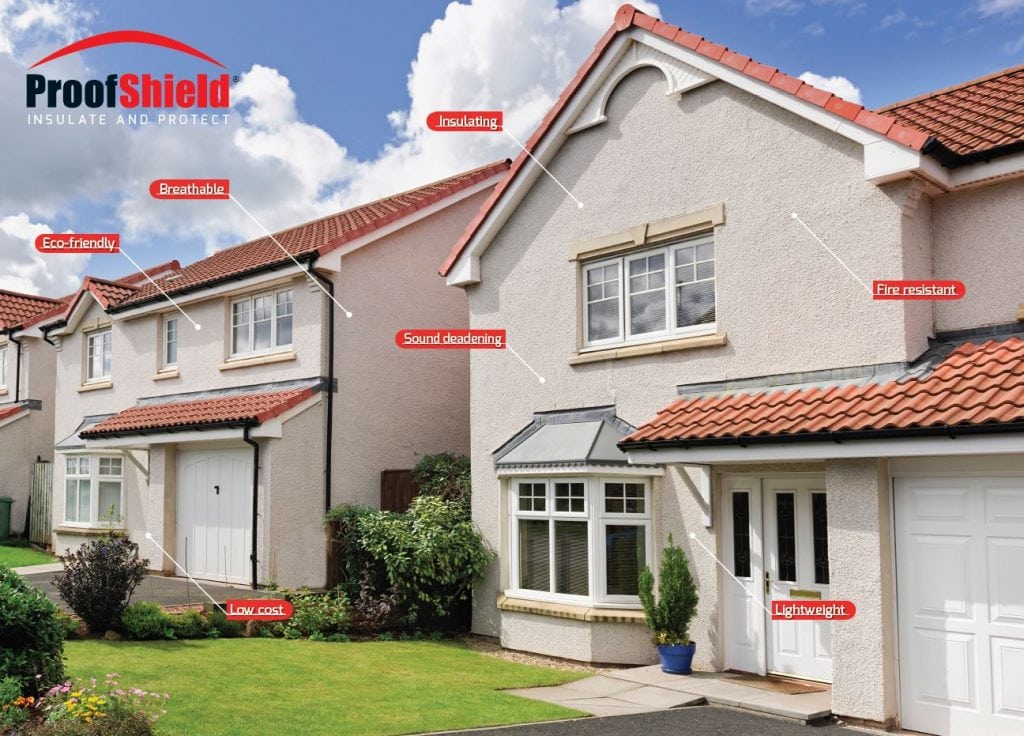
ProofThermÌýinsulating render has an independently verified thermal conductivity of 0.06w/m2K. When applied as a render basecoat to an external/internal wall it creates a breathable, thermally resistant continuous barrier against heat loss, reducing the heating/cooling load of the building without creating the moisture retention problems so often associated with the regular petrochemical insulating materials.Ìý

A 20mm base coat ofÌýProofThermÌýrender to a bare masonry wall can increase its thermal resistance by up to 250%.Ìý

The material cost of usingÌýProofThermÌýinsulating render is approximately £6.50 ex vat per m2 when applied at 20mm depth. Heat loss through walls accounts for approximatelyÌýa third of all heat loss in the average UK home according to the . Once installed, ProofThermÌýrequires zero maintenance and has a service life in excess of 30 years.Ìý

Case Study

ProofThermÌýwas used to insulate the external walls of a Victorian property inÌýLondonÌýin October 2020. By February 2021 the owner had measured a 20% reduction in relative humidity in the lower ground floor area as the breathable nature ofÌýProofThermÌýallowed the bricks to dry out once the existing sand and cement render was removed.ÌýÌýÌý

ÌýAs the lower ground floor area was electrically heated and metered independently from the rest of the property, a recorded reduction in electricity use of 22% across the equivalent periodÌýand with the same occupation and usage patterns can be largely attributed to the increased insulation values of the walls.Ìý

Facts and Figures

0.06 w/m2K

This page presents data, evidence, and solutions that are provided by our partners and members and should therefore not be attributed to UKGBC. While we showcase these solutions for inspiration, to build consensus, and create momentum for climate action, UKGBC does not offer commercial endorsement of individual solutions. If you would like to quote something from this page, or more information, please contact our Communications team at media@ukgbc.org.

Related